
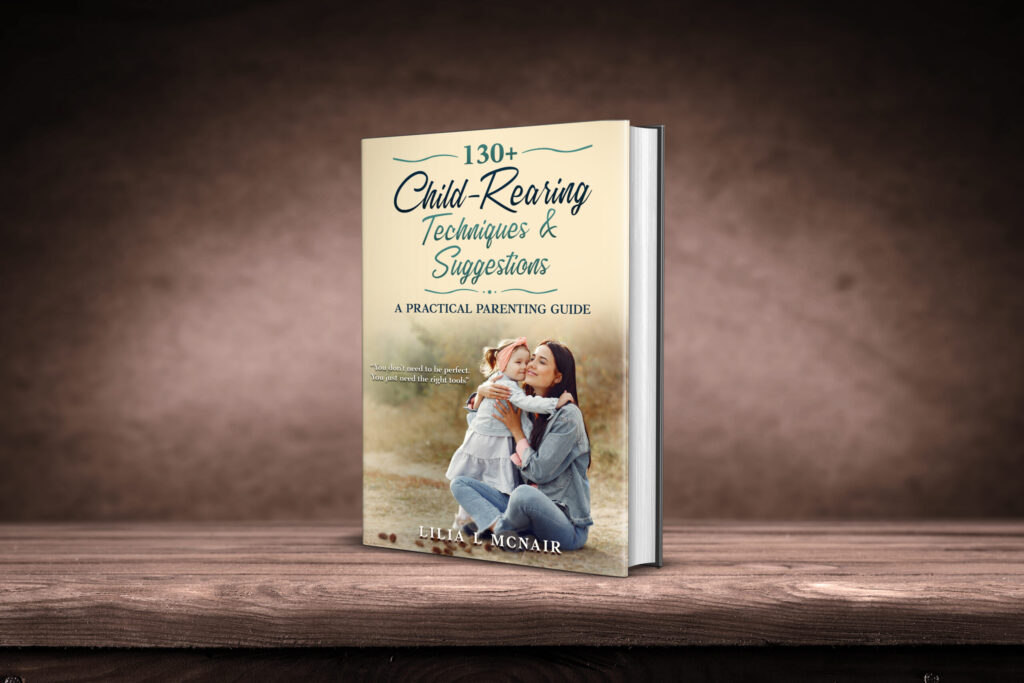
130+ Child-Rearing Techniques & Suggestions
A Practical Parenting Guide
Discover a hands-on guide packed with practical tools to help you navigate your parenting journey. The information and suggestions in this guide are drawn from personal research and experiences, from various professional sources and theoretical approaches, and from the research conducted by professionals in the field. It contains more than 130 practical child-rearing techniques and suggestions that can help not only parents but also guardians, educators and anyone who works with children.
ABOUT THE BOOK
This guide is inspired by the recommendations of the United Nations (UN), UNICEF, World Health Organization (WHO) and UNESCO, which emphasize the importance of respecting the human rights of children and advocating for more positive parenting techniques over harmful methods that are still widely used around the world, including physical and psychological punishment, violence, and abuse [1-3].
A global study on violence against children which was conducted in 2006 revealed that violence and abuse of children exist in every country worldwide without exception. Specifically, it noted that violence against children often stems from factors such as outdated practices and beliefs about punishment, a lack of awareness of what harms or benefits children in parenting practices, and a lack of understanding of children’s developmental stages and their human rights [5].
In 2022, the United Nations reported that violence against children had increased since 2006 due to factors such as the pandemic, various humanitarian crises around the world and migration. Despite various efforts, violence against children as well as the decline in children’s mental and psychological well-being continues to be observed globally in 2026. Literature and media highlight a rise in cases of domestic violence, juvenile delinquency, school bullying, and other psychological issues in children, such as depression, suicidal tendencies, addiction to electronic devices, substance abuse, gambling and diminished emotional and mental health [4].
To prevent child abuse and violence, various ways are recommended, including: (a) changing outdated disciplinary practices and beliefs, including corporal punishment and other forms of violence; (b) promoting positive communication with our children; (c) enhancing parenting skills in positive (non-violent) discipline for problem-solving and conflict resolution; (d) educating parents about the developmental stages of their children; and (e) understanding children’s rights.
This guide is based on these recommendations, aiming to prevent violence and abuse against children, while offering various alternative, positive, practical methods, techniques, and suggestions. It aims to support parents raise happy, resilient and well-balanced children.
Please click the link to visit my book in Amazon: 130+Child Rearing Techniques & Suggestions: A Parenting Guide.
Visit my book in Goodreads
BIBLIOGRAPHY
1.UN, Rights of the Child: http://undocs.org/A/61/299.
2.https://www.ohchr.org/en/treaty-bodies/crc/united-nations-study-violence-against-children.
3.https://www.who.int/teams/social-determinants-of-health/violence-prevention/global-status-report-on-violence-against-children-2020.
4.https://www.who.int/europe/publications/i/item/9789289060356 and https://www.who.int/news-room/fact-sheets/detail/adolescent-mental-health.
5.https://documents.un.org/doc/undoc/gen/n06/491/05/pdf/n0649105.pdf
“When we allow violence against children, we enable violence against all”

“A concise easy to read informative guide.”

J.D.
Father