
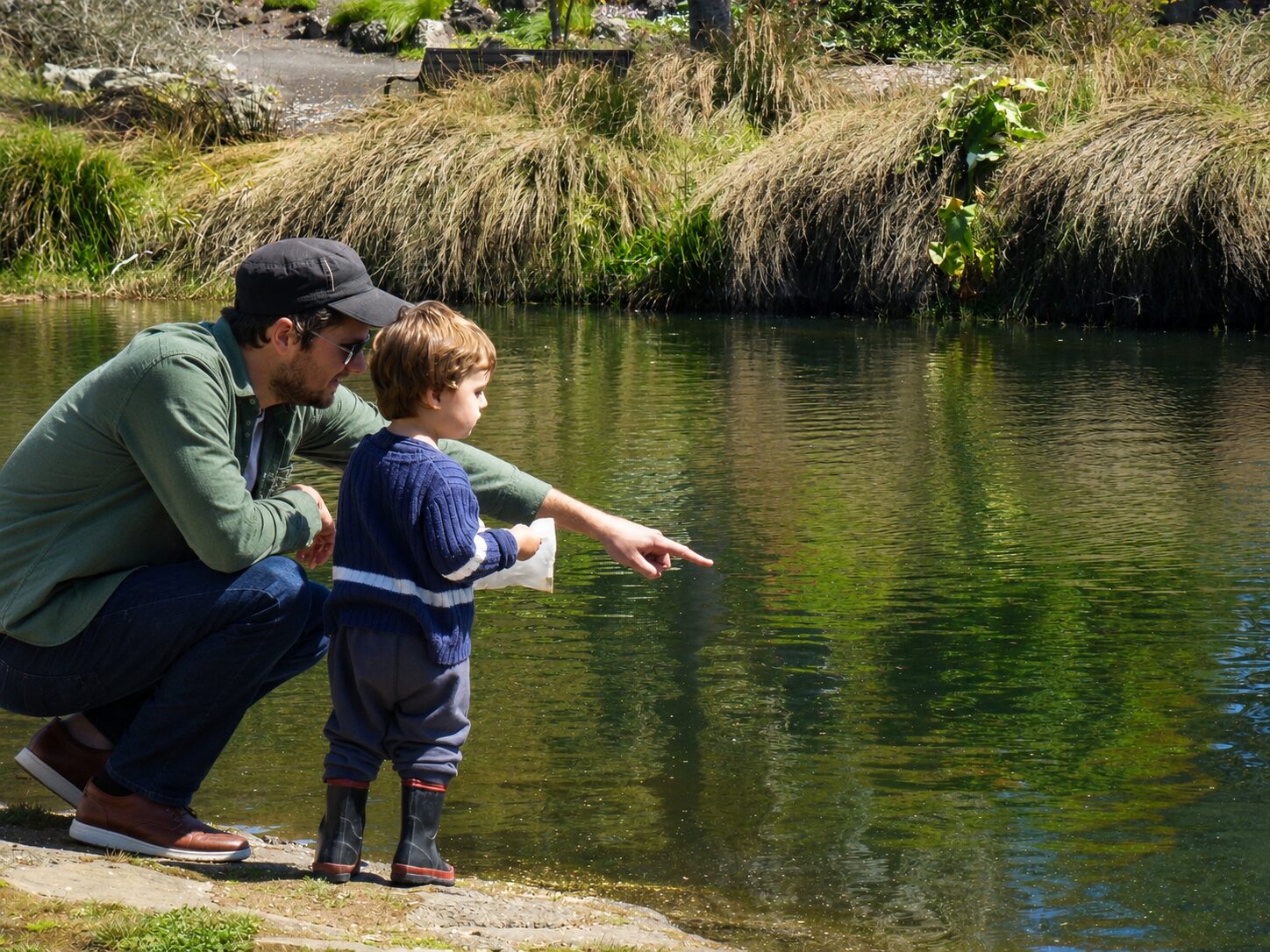
Do you want to strengthen communication and connection within your children?
Communication is one of the most powerful tools human beings possess. It allows us to share information, express emotions, build relationships, and develop understanding. Within a family, communication serves as the foundation upon which trust, connection, and emotional security are built. For children, the quality of communication they experience at home can significantly influence their emotional well-being, self-esteem, relationships, and future success.
Researchers generally distinguish between two forms of communication: verbal and non-verbal. Verbal communication involves the words we speak, while non-verbal communication includes facial expressions, body language, eye contact, physical touch, tone of voice, posture, gestures, and written communication. Every interaction we have with our children conveys a message—not only through what we say, but also through how we say it.
Every parent hopes to build a loving, respectful relationship with their child. We want our children to listen to us, trust us, and feel comfortable turning to us for guidance and support. However, effective communication does not always come naturally. Parenting is a journey filled with rewarding moments as well as periods of stress, uncertainty, and frustration. During challenging times, communication can break down, leading to misunderstandings, conflict, or emotional distance.
The way we communicate is often shaped by our own childhood experiences. Family communication patterns, cultural values, beliefs, and attitudes are frequently passed down from one generation to the next. Children learn how to communicate by observing the adults around them. They absorb not only our words but also our behaviours, reactions, and emotional responses [1].
This is why communication is such a powerful teaching tool. Children often mirror what they experience. If they are spoken to with respect, they learn to communicate respectfully. If they are listened to, they learn the value of listening. Conversely, if communication is characterised by yelling, criticism, or avoidance, children may adopt similar patterns in their own relationships [1, 2].
At its core, positive communication with children is built upon love, trust, empathy, and respect. It focuses on teaching rather than criticising and seeks to understand rather than judge. It acknowledges children’s individuality while providing guidance and support.
The Power of Non-Verbal and Verbal Communication
Research in child development and communication highlights the remarkable impact of non-verbal communication. Human beings are naturally wired to interpret body language, facial expressions, and emotional cues. In many situations, children pay more attention to what we do than what we say [3, 4].
Non-verbal communication can either reinforce or contradict verbal messages. For example, a parent may verbally reassure a child after a disappointment but unintentionally communicate frustration through facial expressions or tone of voice. In such cases, children often focus on the non-verbal message.
Verbal communication is also very impactful in our relationship with our children. In today’s fast-paced world, it is easy to speak without fully considering the impact of our words. Stress from work, family responsibilities, financial concerns, or daily frustrations can influence how we communicate with our children.
Words matter profoundly.
Research suggests that verbal communication can play a crucial role in children’s cognitive and language development. The messages children repeatedly hear often become part of their inner dialogue. Labels, criticism, and negative characterisations can shape self-beliefs that persist into adulthood. Conversely, encouragement, validation, and constructive guidance can nurture confidence, resilience, and a positive self-image [5, 6, 7, 8, 9].
A Sample of Communication Techniques
- Active listening [10, 2].
- Eye contact
- Expressing Love [11, 12, 13, 14].
- Encouragement and Praise [12].
- Providing Choices [15, 16].
- Respecting and Valuing Our Child’s Opinions.
- Sharing Stories and Personal Experiences [17].
- Honesty and Authenticity [18, 19, 20, 2].
- Avoiding Criticism and Focusing on Guidance [21, 22].
Final Thoughts
Strong family communication is not about perfection. It is about creating an environment where every family member feels heard, respected, and loved. Through our words, actions, and daily interactions, we teach our children how to understand themselves, relate to others, and navigate the world around them.
The conversations we have today help shape the adults our children become tomorrow. By investing in healthy communication, we are giving our children one of the greatest gifts possible: the ability to build meaningful relationships, face challenges with confidence, and thrive throughout life.
For parents who would like to explore these concepts in greater depth and discover practical communication tools for strengthening family relationships, my guide 130+Child-Rearing Techniques & Suggestions offers many more techniques, additional insights, research-based strategies and information, and real-life guidance.
BIBLIOGRAPHY
1. Kreppner, K. (1996). Communication behavior between parents and their adolescent children and correlation with indicator of self-concept. Praxis der Kinderpsychologie und Kinderpsychiatrie.. 45(3-4):130-147. PMID: 8657663. V. 45, pp 130-147.
2. Bandura, A. (1986). Social foundations of thought and action: A social cognitive theory. Englewood Cliffs.
3. Allwood J. (2002). Bodily communication dimensions of expression and content. In Multimodality in language and speech systems (pp. 7–26).
4. Grebelsky-Lichtman T. (2015). Parental response to child’s incongruence: Verbal versus nonverbal primacy in parent-child interactions.
5. Rachel, R. Romeo, Julia, A. Leonard, Sydney T. Robinson, Martin R. West, Allyson, P. Mackey, Meredith L. Rowe, John D.E. Gabrieli (2018). Beyond the 30-million-word-Gap: Children’s Conversational Exposure is Associated With Language-Related Brain Function. Psychological science, 095679761774272.
6. Trafton J. Anne (2018). Back-and-Forth exchanges boost children’s brain response to language. Psychological Science, Institute of Brain Research at MIT. https://news.mit.edu/2018/conversation-boost-childrens-brain-response-language-0214
7. Romeno, R.R., Segarna, J., et.al (2018). Language Exposure Relates to Structural Neural Connectivity in Childhood. Journal of Neuroscience https://pubmed.ncbi.nlm.nih.gov/30104336/
8. Raboteg-Saric, Z. & Sakic, M. (2013). “Relations of Parenting Styles and Friendship Quality to Self-Esteem, Life Satisfaction and Happiness in Adolescents. Applied Research in Quality of Life.” Sept 2014, 9 (3), 749-765.
9. Liable, D.J., Gustavo, C., & Roesch, C. (2004). “Pathways to self-esteem in late adolescence: the role of parent and peer attachment, empathy, and social behaviours”. Journal of Adolescence. Vo 27 (6), p 703-716.
10. Timothy Atunnise (2023). Conscious Parenting: Mastering Active Listening to your Children (The Art of Active Listening). Independently published.
11. Gordon Neufeld & Gabor Mate (2006). Hold On to Your Kids: Why parents need to matter more than peers. Balantine s, publisher.
12. Alfie Kohn (2006). Unconditional Parenting: Moving from Rewards and Punishments to Love and Reason. https://www.amazon.com/Unconditional-Parenting-Moving-Rewards-Punishments/dp/0743487486
13. S. Cohen, D. Janicki-Deverts, R. B. Turner, W. J. Doyle. (2014). Does Hugging Provide Stress-Buffering Social Support? A Study of Susceptibility to Upper Respiratory Infection and Illness. Psychological Science.
14. Foster Cline & Jim Fay (2020). Parenting with Love and Logic: Teaching Children Responsibility. NavPress.
15. Rapp, D.J., Engelmann, J.M, Herrmann, E. & Tomasello, M. (2017). The impact of choice on young children’s prosocial motivation. Journal of Experimental Child Psychology. V 158, p 112-121.
16. Castelo, R. J etal. (2022). Parent Provision of Chοice is a key component of autonomy support in predicting child executive function skills. Sec. Developmental Psychology, v12. https://www.frontiersin.org/articles/10.3389/fpsyg.2021.773492/full
17. Rosen Sidney (1991). My Voice Will Go with You: The Teaching Tales of Milton, H. Erickson. W.W. Norton, New York.
18. H. Chelsea, L. J. Carver (2014). Follow the liar: the effects of adult lies on children’s honesty. Developmental Science, 17 (6), pp 977-983.
19. Bureau, S.J., Mageau, A.G. (2014). Parental Autonomy support and honesty: The mediating role of identification with the honesty value and perceived costs and benefits of honesty. Journal of Adolescence, v.37,3, p.225-236.
20. Engels, R.C.M., Finkenauer, C., van Kooten, D.C. (2012). Lying Behavior, Family Functioning and Adjustment in Early Adolescence. Journal of Youth and Adolescence, v.35 p. 949-958.
21. Lisitsa, Ellie. “The Four Horsemen: Criticism, Contempt, Defensiveness & Stonewalling.” Gottman Relationship Blog. Gottman Institute. 2013, pp 04-24 http://gottmanblog.com
22. Fowler, Craig; Dillow, Megan R. (2011). “Attachment Dimensions and the Four Horsemen of the Apocalypse”. Communication Research Reports. 28 (1): 16–26